
What a hook is, and what it is not
A hook is the opening line, image or sound that gives a stranger a reason to keep watching. It is not a trick. A good hook makes a promise that the rest of the video keeps. If the opening says one thing and the video delivers another, people notice, and they stop trusting your next clip.
A hook does not guarantee views either. It improves the chance that the right person gives your idea a few more seconds.
Five hook patterns
-
 Bold claim State a clear opinion
-
 Question Ask what the viewer wonders
-
 Story start Open mid-moment
-
 Surprise Lead with the unexpected
-
 Promise Say what they will get
- Bold claim. A clear opinion that someone might disagree with. Example: "Most intros waste the first ten seconds."
- Question. Ask the question the viewer is already asking themselves. Example: "Why do your best ideas never get watched?"
- Story start. Begin in the middle of the moment, not at the beginning. Example: "I almost quit my podcast last spring."
- Surprise. Lead with the part that does not match expectations. Example: "The clip I nearly deleted did the best."
- Promise. Say plainly what the viewer will get. Example: "Three ways to fix your audio in two minutes."
These are examples of the shape of a hook. Your own words, from your own footage, will always sound better than a template.
How to find a hook in footage you already have
Editors and creators rarely invent a hook. They find the sentence that already contains the point, and open on it.
- Scan for the sentence with a point. It is often a few sentences after the speaker warms up.
- Check that it stands alone. A stranger should understand it with no earlier context.
- Cut to it. Remove the greeting, the throat-clearing and the "so, today I want to talk about".
- If no line works, add a short line of on-screen text that states the point, rather than changing what was said.
Where the point lands
The timing matters more than the wording. In a short clip, the point should arrive in the first second or two. A lead-in that feels normal in a long video feels slow in a short one.
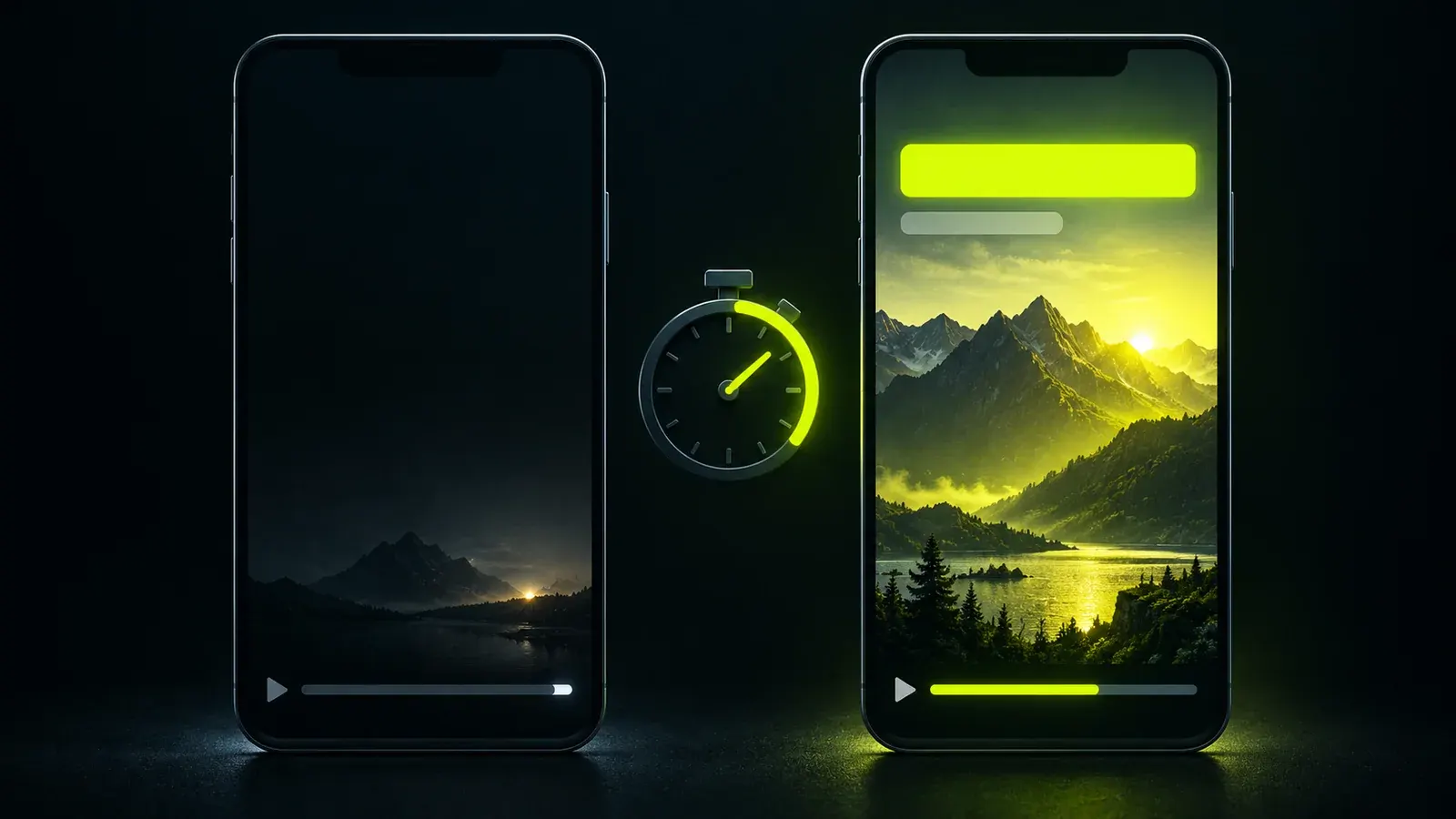
- Left, weak. A lead-in comes first, so the point arrives after the moment many viewers have already decided.
- Right, stronger. The point starts at zero. The detail follows once the viewer knows why to stay.
Support the hook visually
- Start on a face or an action, not on a logo or a title card.
- Let the first caption start with the first spoken word, so reading and listening begin together.
- Use one clear visual cue, such as a highlighted keyword or a number on screen, instead of several effects.
- Keep the first cut deliberate. A cut in the first second should add something.
Match the hook to the payoff
The strongest hook is one you can keep. Before you publish, ask whether the clip answers the question it raises. If the hook promises three ways and the clip gives one, change the hook or the clip. Honest hooks also protect your credibility with the audience you are building.
Common mistakes
- Starting with "Hi, I'm..." or a logo animation.
- A hook that needs the rest of the episode to make sense.
- Overpromising, so the clip cannot deliver what the opening claimed.
- Several hooks stacked in a row instead of one clear line.
- Captions that start late, or text that covers the speaker's face.
A quick test before you publish
- Read the first line aloud. Does a stranger know what is in it for them?
- Cut the first sentence. Does the clip still work, and does it work better?
- Watch it with the sound off. Do the captions carry the hook?
To go from a long recording to a set of clips, see how to turn a podcast episode into short clips.